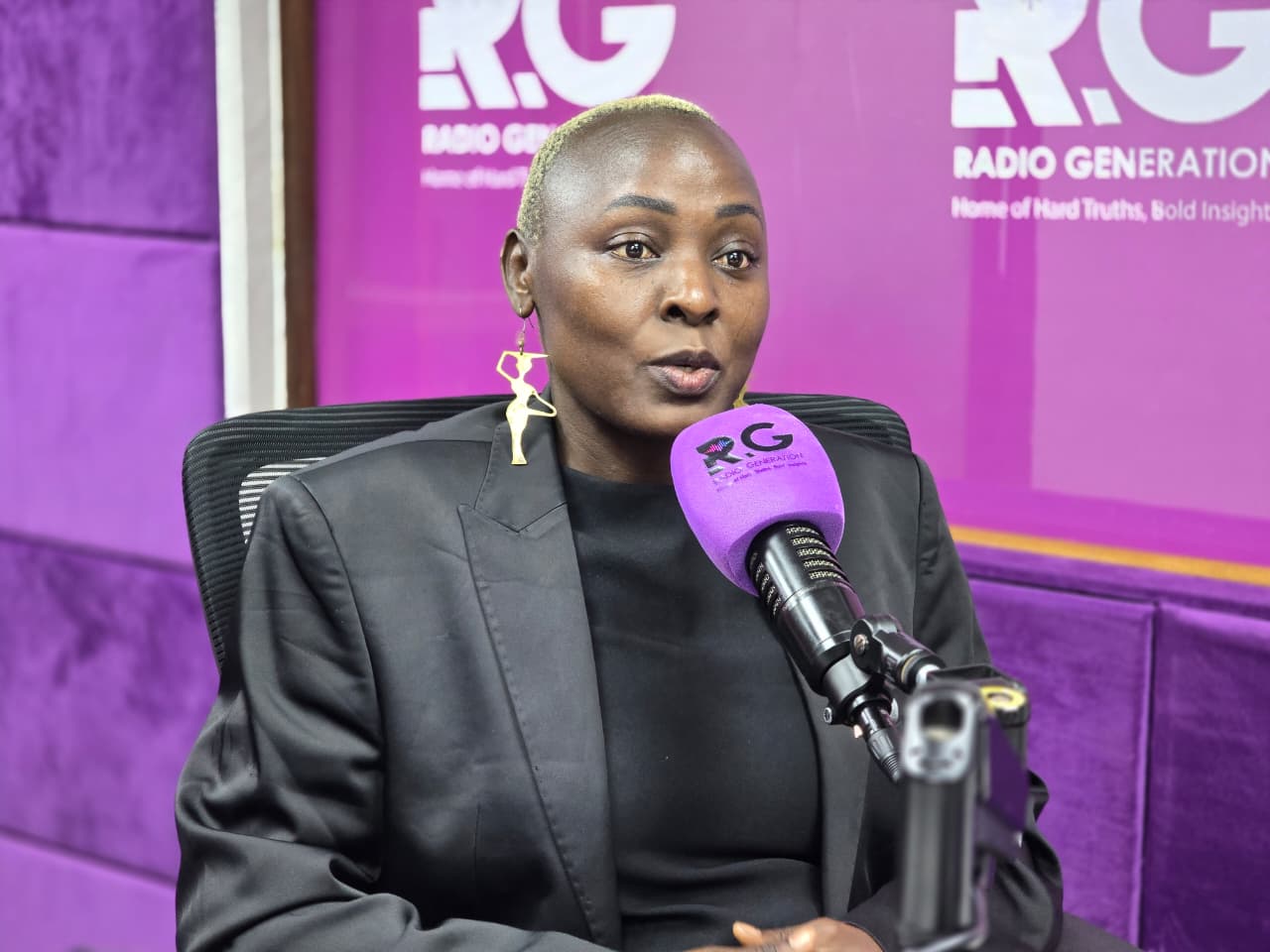
The head of the Association of Media Women in Kenya (AMWIK) has raised serious concerns over the continuing sexual harassment of women journalists in Kenyan newsrooms, describing it as a widespread issue that threatens their safety, confidence, and career growth.
Queenter Mbori, the executive director of AMWIK, revealed during an interview on Radio Generation that sexual harassment is not only common but deeply entrenched in the media sector.
She said seven out of ten women journalists have encountered harassment either at work or online, reflecting a troubling gender imbalance in the industry.
“I’m actually happy to know that your previous employer had a working sexual harassment policy,” Mbori said on Thursday.
“I would say that is the exception, because majority of media organizations, based on a study we did in 2023, show that the prevalence rates of sexual harassment in the media are quite high,” she added.
Her remarks echo findings from a 2021 study, which showed that 70 percent of women in media reported experiencing some form of harassment.
A 2023 AMWIK survey also highlighted that 60 percent of journalists had faced harassment, with more than 75 percent of perpetrators being male editors or supervisors.
Globally, women journalists continue to face harassment, with a 2022 World Association of Newspapers (WAN-IFRA) study indicating that 41 percent have encountered verbal or physical abuse.
Online harassment is increasingly common, with many women reluctant to report incidents due to fear of retaliation and weak reporting systems.
Mbori explained that the worrying trends prompted media stakeholders to take collective action.
“We all met in Maanzoni and came up with a declaration,” she said.
“That declaration is what led to the industry committing to a zero-tolerance approach to sexual harassment in the media.”
Despite these efforts, progress has been slow.
AMWIK’s recent findings show that 65 percent of women journalists continue to experience online harassment, particularly on social media.
Mbori noted that interns are often the most affected group.
“The most unfortunate bit,” she said, “is that when you look at the prevalence habits, those most affected were the interns.”
She highlighted that the problem extends beyond written policies to issues of power and silence. “When it comes to sexual harassment policies that are supposed to safeguard women, there seems to be a lapse between policy and implementation. That’s a fact,” Mbori said.
Harassment, she said, is often a power play. “The person who has more power, more often than not, is the perpetrator,” she added. “And in most cases in our newsrooms, those are the supervisors, the decision makers.”
Awareness and training remain critical.
“When you understand what sexual harassment is—an unwarranted, unsolicited act of a sexual nature and it happens to you, and you say stop, and it continues, then that is harassment,” Mbori explained.
She further emphasized that harassment is not always direct. “Sometimes it’s what we call third-party harassment, when you witness something inappropriate happening to someone else, or you’re made uncomfortable by a colleague’s behavior. That too should be reported.”
For Mbori, the key to addressing harassment lies not only in having policies but ensuring they are applied effectively to create safe work environments. “What matters is having a policy that outlines these different scenarios and the measures to address them,” she said.































Comments
Sign in with Google to comment, reply, and like comments.
Continue with Google